

Beyond Net Zero: What True Sustainability in Architecture Really Means
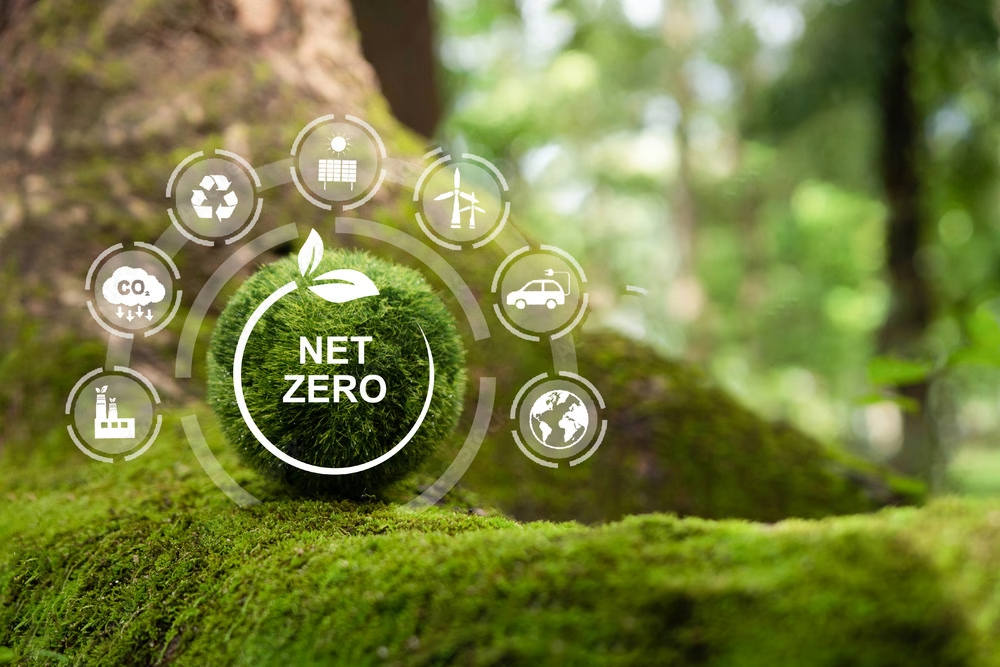
In recent years, “net zero” has become the holy grail of architecture. From glossy brochures to government pledges, the phrase dominates conversations about the built environment. But what does it really mean – and is it enough? To move from marketing slogan to meaningful transformation, the industry must rethink what true sustainability entails.
The limits of net zero.
At its simplest, net zero means balancing greenhouse gas emissions with equivalent offsets, often achieved through renewable energy generation or carbon credits. For buildings, this usually translates into:
- Highly insulated envelopes to reduce energy demand.
- Integration of renewables such as rooftop solar.
- Purchasing offsets for remaining emissions.
While these measures are vital, they often focus narrowly on operational energy – what happens once a building is in use. This leaves a blind spot: the enormous embodied carbon locked in materials and construction processes.
Embodied impact matters.
Concrete, steel and aluminium production account for a huge share of global CO₂ emissions. A building may operate efficiently, yet its construction may have generated more emissions than decades of future energy use.
True sustainability requires addressing this front-loaded impact through material choices, circular design and responsible supply chains. For architects and developers, this means asking not only “How much energy will this building consume?” but also “How much carbon was released to build it?”
Beyond efficiency: regeneration.
The next frontier is not just minimising harm, but creating positive impact. This includes:
- Designing with carbon-storing materials like timber and bio-based composites.
- Developing façades that improve urban microclimates.
- Producing buildings that generate more renewable energy than they consume.
- Incorporating systems that improve air quality, biodiversity and community wellbeing.
Sustainability, in this sense, is no longer a defensive strategy. It is an active contribution to the health of people and the planet.
Social and cultural dimensions.
True sustainability also reaches beyond carbon. It is about social responsibility: creating affordable housing, ensuring accessibility, and building resilient communities. Architecture shapes not only energy flows, but also human lives.
As cities densify, questions of equity, wellbeing and cultural identity become inseparable from environmental goals. A building cannot be called sustainable if it ignores the people who live and work within it.
Towards a new benchmark.
The industry is entering a paradigm shift. Net zero is an important milestone, but the ultimate destination is regenerative architecture: buildings that give back more than they take.
This requires a broader lens, one that measures not just kilowatt-hours saved, but ecosystems restored, communities supported and resources conserved.
Conclusion.
Net zero was a start. But if architecture is to lead in tackling the climate crisis, it must go beyond the numbers game of offsets and efficiency.
True sustainability means reimagining buildings as agents of regeneration – structures that actively improve the environment, enrich societies, and stand as testaments to responsibility as much as to design.
Share This Story


news via inbox
Your source for the latest news in the fenestration industry.
